

At the end of May in the south of England the elderflowers start to open, adding their delicate perfume to the heady mix of spring scents. As May turns to June the flowering spreads north and with it the wave of households making elderflower cordial. It’s a refreshing, aromatic summer drink and an excellent addition to cocktails – and it’s really easy to make. Homemade versions invariably taste better than their shop bought imitators.
There are recipes galore on the internet and mine is at the bottom of this page, but all you really need are these four things:
1. Elderflowers
Pick carefully and try to brush off any bugs as you go. You don’t want to wash the flowers as most of the flavour comes from the pollen. Try and store upright in a bag as you pick, again to keep as much of the pollen as possible on the flowers.
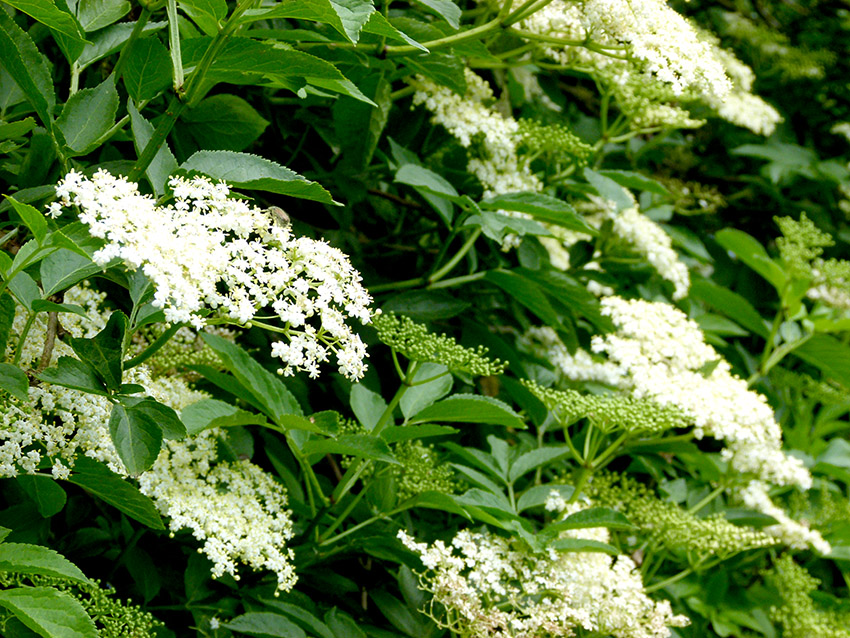

Elder (Sambucus nigra) is a common plant throughout the UK except in the far north of Scotland. It is found in hedgerows, at the edge of woodland and also on wasteland. It readily self seeds. It’s a scruffy looking large shrub with many stems rather than a trunk. Smelling the flowers is the best way of making sure you have the right ones! Pick flowers on a sunny day and preferably in the morning so that newly opened flowers are fresh.
Elder is an important hedgerow plant for wildlife so try not to denude an individual bush! Bees and hoverflies love the flowers in spring while the autumn berries provide a feast for several bird species as well as small mammals.
2. Something sweet – sugar or honey
White granulated or caster sugar is recommended in most recipes and it makes a sweet, traditional cordial with a beautiful pale yellow colour. I prefer using golden granulated or soft brown sugar for a more caramel sweetness as I don’t have a particularly sweet tooth. The downside is that brown sugar makes the cordial a less appealing brownish colour!
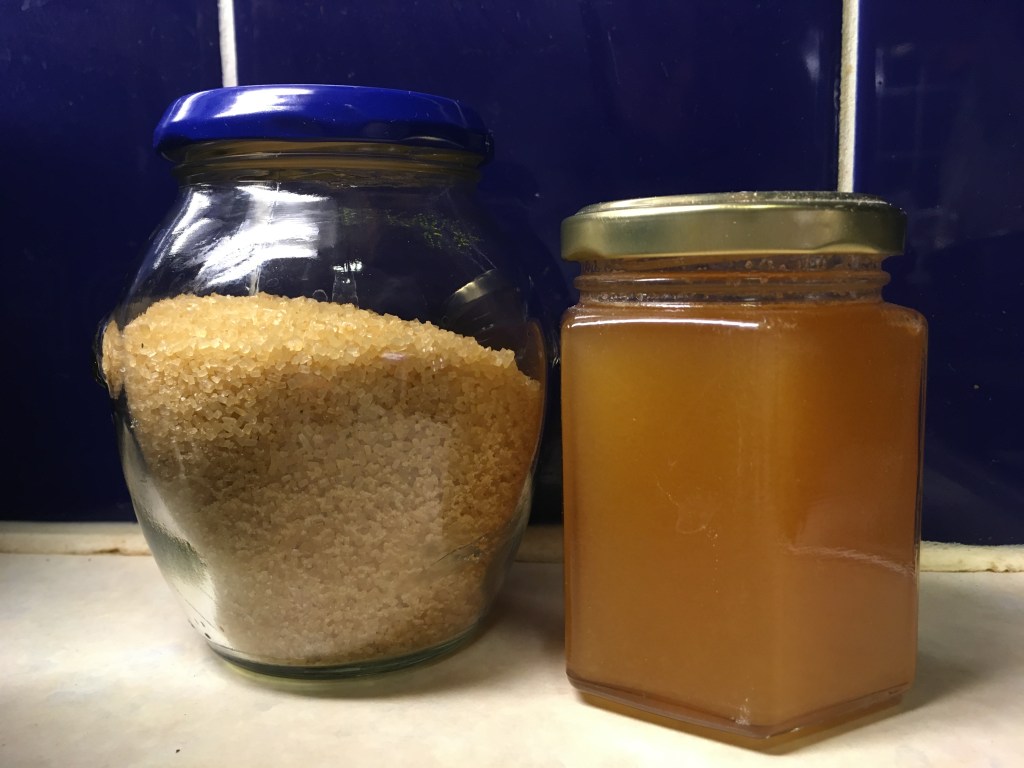
Honey as a replacement for sugar gives a more complex sweetness. Honey is also a preservative so the cordial should last a little longer.
3. Something sour – lemons, limes, oranges
Lemons should make up the bulk of the citrus but I do like to add a bit of lime. Adding some orange slices enhances the floral quality but can also overpower the delicate elderflower.

I like my cordial quite sour so juice the lemons before adding to the mix. Before juicing I zest the lemons and add this too. Some recipes just call for sliced lemon but this does not release as much flavour in the steeping process.
4. Water
Soft water is best so try and filter it if you live in a hard water area. Having said that, I’m in London with extremely hard water and can never be bothered so it’s just straight out of the tap!
Citric and tartaric acid
Many recipes additionally include citric or tartaric acid. These prolong the life of the cordial and are a good idea if you want to make several bottles. Without this addition the cordial will last for two to three weeks in the refrigerator. With the acid that goes up to between three and four months.
The acid also provides a sharp tang but I prefer to achieve this by adding more lemon. If you want to make a large batch without adding the acid, try freezing some in plastic bottles or containers. The high sugar content means it won’t freeze solid but will still last longer. Or be a ready source of elderflower sorbet!
Simple elderflower cordial recipe
Ingredients:
15-20 flower heads, depending on size, larger stalks removed. Do not wash as much of the flavour comes from the pollen.
750g granulated sugar or 400g + 3 tablespoons honey
Juice and zest of two unwaxed lemon
1 unwaxed lime, sliced
1 litre boiling water
Method:
Place sugar in a large bowl or saucepan and dissolve with boiling water. Add elderflowers, lemon juice and zest and/or your choice of other citrus. Stir well then cover and leave to steep for 24 hours at least, preferably 48 hours. Stir twice a day.
Strain through muslin and decant into sterilized bottles. If you don’t have muslin, line a sieve with good quality kitchen paper.
This is a guideline and starting point recipe. Experiment to suit your taste using the information above to decide what to include or exclude. The flowering season is short so make some notes if you want to remember the things you might like to change the next year.


c Jim Champion, Southampton UK 
 Wild About Life
I just made my first batch of the year. Like you, I love plenty of lemon, and less sugar.
LikeLiked by 1 person