
Butterflies are beautiful insects and something we associate with summer sunshine, meadows and flowers. They feature in fabric, fashion, earrings and tattoos, butterfly kisses and symbols of the soul. In ancient Greek the word for butterfly is psyche, indicating how we use them to represent something from within. Around the world they are traditionally associated with beauty, perfection, joy and transformation.
Moths on the other hand come with portents of darkness and evil. They are harbingers of death in folklore and mythology. Messengers from the dead and eaters of our clothing. They get a lot of bad press but can be just as beautiful and fascinating as their daytime relatives. They are far more numerous and are often important pollinators of night flowering plants.
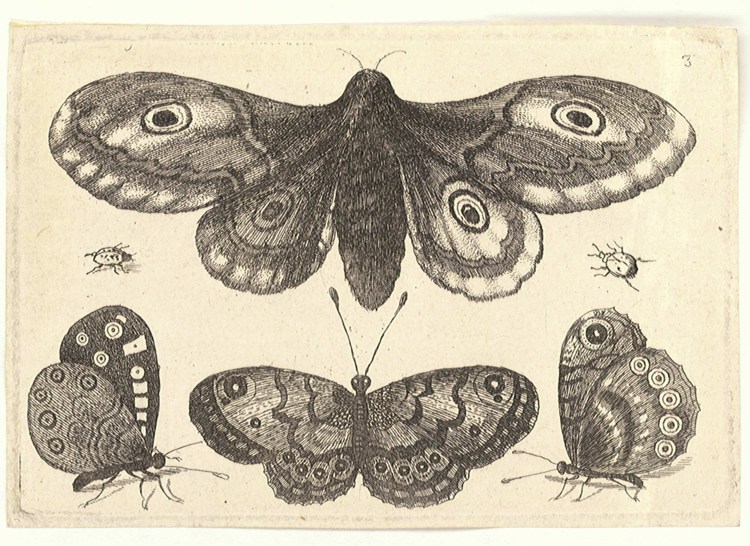
Yet many species of moth are day flying and some butterflies are crepuscular meaning they fly at dawn and dusk. Some species of moth pretend to be butterflies and some species of butterfly pretend to be moths. Some people love butterflies and hate moths and the opposite is also true.
And some people dislike them both, even to the extent of a phobia, usually because of the flappy and erratic flight of moths and butterflies.
Whatever you may think of them, here are some quick and easy ways to tell them apart. They are both truly fascinating creatures and perhaps a little bit of extra knowledge will help convert some of those who need convincing!
1. Antennae
Butterfly antennae have a distinctive clubbed shaped, narrow at the head end and widening to a bulb at the end.
Moth antennae are feathery or saw-edged. Female moths emit pheromones and males use their antennae to detect them. So the antennae of male moths are usually more feathery than females of the same species.
There are, of course, exceptions as some species try to imitate others. But this difference will apply in almost all cases.

2. Wings
When butterflies land they usually stand with their wings folded up vertically behind their back. The underside of the wings are less colourful and provide camouflage.
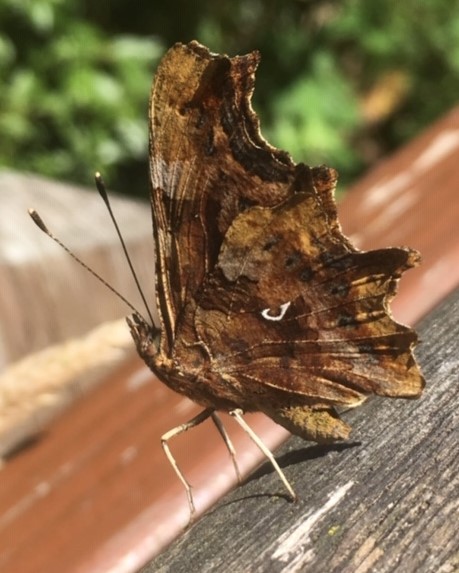
Comma butterfly, wings closed.
Note the white marking that gives the comma its name.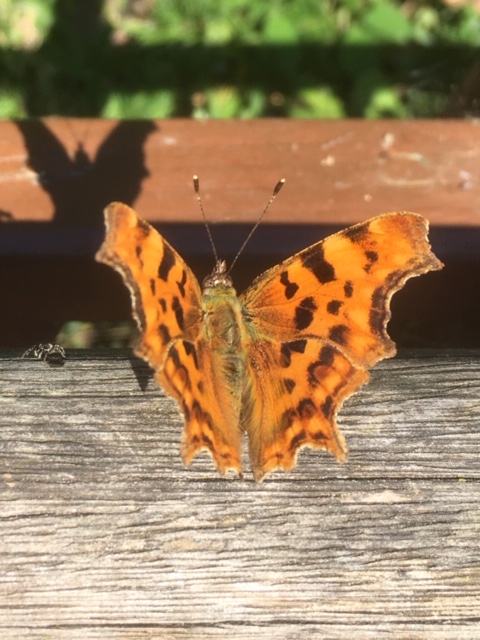
Comma butterfly, wings open.
I love the batman shadow!
Both of these pictures show the butterfly’s
clubbed antennae
A moth’s wings are held in a position similar to the open wings of a butterfly. They are, however, usually tented so that all or part of the abdomen is concealed. A moth’s open wings often provide camouflage on its most common alighting plant.


From left to right: Buff tip moth, master of camouflage, on a silver birch twig. Mullein moth, wings tented over abdomen. Wavy-lined emerald moth, wings partially covering abdomen, note the feathered antennae.
Moths have a frenulum, a device that joins the hind wing to the forewing so the wings can work together in flight. Butterflies do not have frenulums.
3. Behaviour
Butterflies are generally diurnal, meaning they fly in the daytime. A few species fly at dusk or in the early morning. This is known as crepuscular behaviour.
Many moth species are nocturnal, flying at night. But there are also dozens of species of day flying moths, many of them very small. Look out for some in summer meadows.
4. Cocoon or chrysalis
Butterflies and moths both metamorphose or change into something else during their life cycle. During this process from caterpillar to their spectacular adult form they need protection for the pupa, the next stage of development.
Butterflies form a hard protective shell known as a chrysalis while moths spin a silky cocoon to protect their pupae. But many moths pupate underground and may not spin a cocoon. This can cause confusion during identification as the pupa resembles the chrysalis of a butterfly!
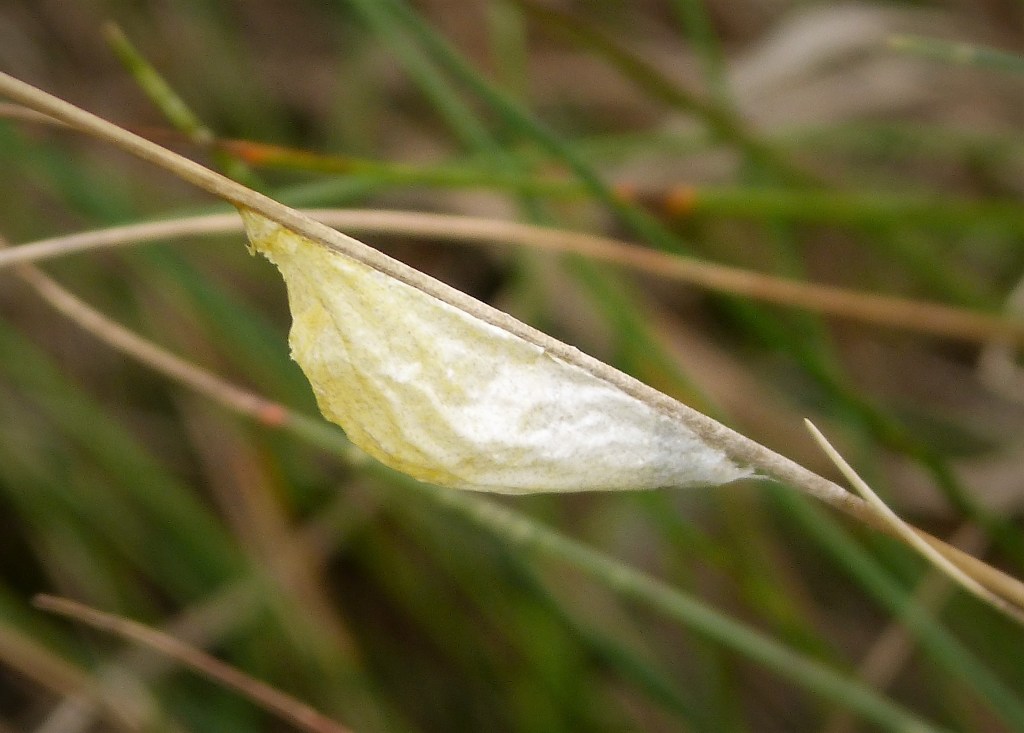
Burnet moth cocoon
Gail Hampshire via WikiCommons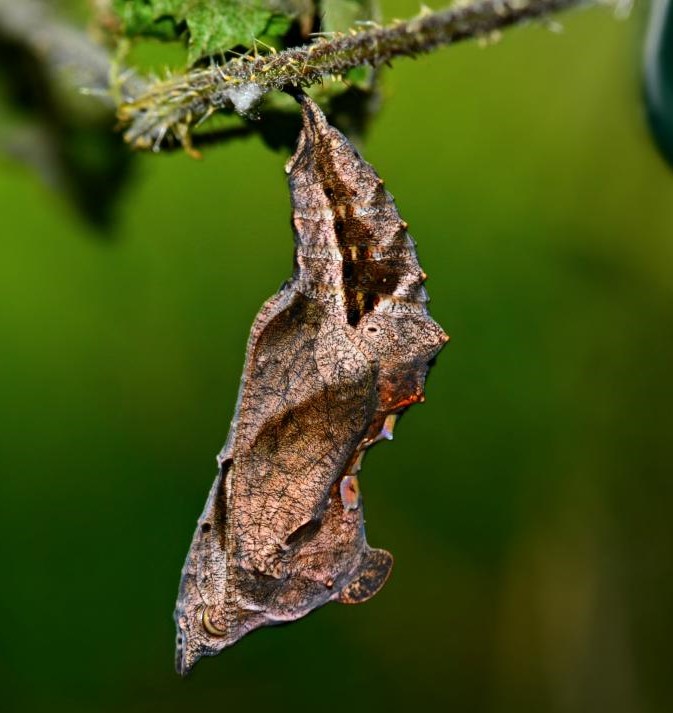
Comma butterfly chrysalis
Butterfly Conservation Trust
Pupa, chrysalis, and cocoon are all quite distinct from each other. The pupa is the stage between the larva and adult stages. The chrysalis generally refers to a butterfly pupa. A cocoon is a silk case that a moth spins to protect its pupa.
Did you know…?
- Moths and butterflies form the classification order Lepidoptera
- New research shows butterflies and moths have tiny pumps in their wings like hearts to pump haemolymph (insect ‘blood’) through their veins.
- There are many more species of moth than butterfly. Butterflies make up about 10% of Lepidoptera while moths are a whopping 90%!
- In the UK there are approximately 60 species of butterfly and 2,500 species of moth.
- The wings or butterflies and moths are covered in tiny scales and these are shed throughout its lifetime – the ‘powder’ we see on our fingers if we inadvertently touch one.
- The world’s most common butterfly is the white (both large and small), or cabbage white. It is found in Europe, Africa, North America, Asia, Australia, New Zealand, Bermuda and even Hawaii.
- The largest known moths are the Atlas moths with wingspans of up to 30cm. The largest butterflies are the birdwings. The Queen Alexandra birdwing of PapuaNew Guinea has a wingspan of about 28 cm.
- The smallest moths are from the pygmy moth family Netpiculidae with wingspans as small as 2.5 mm. The smallest butterflies are the blues (Lycaenidae) in North America and Africa with wingspans between 6mm and 12mm.
For more information on moths and butterflies in the UK go to the Butterfly Conservation website http://www.butterflyconservation.org
You can also join their citizen science project recording sightings of moths and butterflies.


Thank you Alison. This is a very informative post. I learned a lot.
LikeLiked by 1 person